When it comes to storing equipment in the Pacific Northwest, both Portland and Seattle offer strong options—but there are key differences that can impact cost, convenience, and long-term value. Understanding the pros and cons of each market can help contractors and business owners make smarter storage decisions.
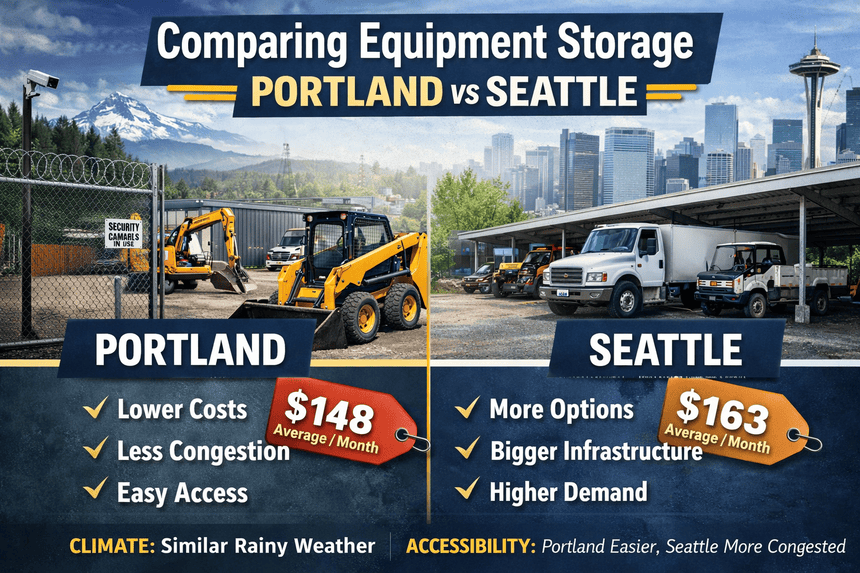
One of the biggest advantages of Portland is cost. On average, storage units in Portland run around $148 per month, compared to about $163 in Seattle—making Seattle roughly 30% above the national average versus Portland’s 18%. For businesses needing large equipment storage or multiple units, that difference adds up quickly. Portland’s lower labor and operating costs also make commercial storage spaces 15–30% cheaper than comparable West Coast markets like Seattle. This makes Portland a more budget-friendly option, especially for growing businesses. However, Seattle does have some advantages—primarily in infrastructure and market scale. As a larger metro with a stronger tech and logistics economy, Seattle offers a wider range of high-end, specialized storage facilities. This can be beneficial for companies needing advanced features like climate-controlled warehousing or proximity to major ports and distribution hubs. That said, higher demand in Seattle often leads to limited availability and higher prices, particularly during peak moving and construction seasons.
Climate is another factor where both cities are surprisingly similar. Both Portland and Seattle experience consistent rainfall and mild temperatures, meaning moisture protection is critical in either location. Climate-controlled storage is often recommended in both cities to prevent rust, mold, and equipment damage. The difference is that Portland users may find slightly better pricing on these upgraded units. Accessibility and congestion also play a role. Portland generally offers less traffic congestion and easier access to storage facilities compared to Seattle, where dense urban development can make transportation and daily access more time-consuming. This can be a major advantage for contractors who need frequent access to their equipment.
On the downside, Portland may have fewer ultra-premium or large-scale industrial storage options compared to Seattle. Businesses operating at a larger scale or requiring specialized logistics infrastructure may still find Seattle more suitable despite the higher cost.
In conclusion, Portland stands out as the more cost-effective and accessible choice for equipment storage, while Seattle offers broader options and infrastructure at a premium. For most small to mid-sized businesses, Portland delivers the best balance of affordability, convenience, and reliability—making it a smart choice for long-term equipment storage. Learn about PDX Auto Storage in more detail.